Practical reader guide
Large-Print Activity Books for Seniors: What to Look For
A practical guide to choosing readable, respectful and enjoyable large-print activity books for older adults.
Begin with readability
Large print is more than a bigger title. Check the activity text, instructions, answer choices and page numbers. Strong contrast, generous spacing and a clear reading order reduce unnecessary effort.
Look at the whole page before buying. A busy page with small instructions still feels difficult even when the main puzzle uses larger type.
- Clear instructions near the activity
- Strong contrast between text and background
- Enough white space around each task
- Consistent page layouts
Choose interest before difficulty
A familiar subject often creates a better starting point than a difficult challenge. Music, television, home life, travel, gardening and family traditions give people something personal to discuss.
For family visits or activity groups, choose books that invite stories. The goal is an enjoyable experience, not a score.
Match the activity to the setting
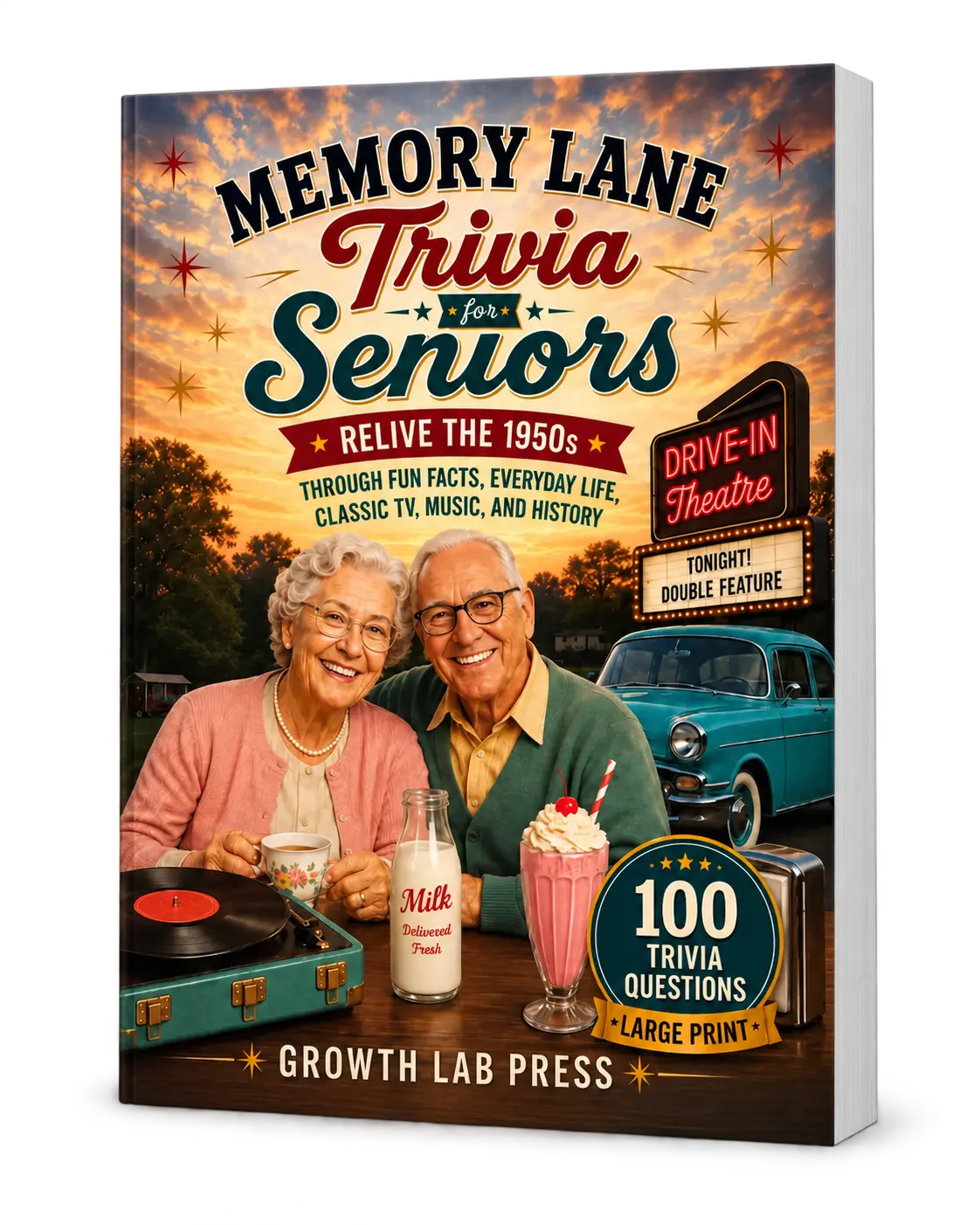
A person using a book alone may prefer short instructions and an answer key. A family group may prefer trivia, open conversation and activities that work aloud. Caregivers often need flexible pages that stop and restart easily.
If attention, vision, hearing or hand comfort changes from day to day, shorter sessions and a choice of activities give the reader more control.
Keep health claims in perspective
Meaningful activities, hobbies and social connection are worthwhile, but a commercial activity book should not promise to prevent or treat memory loss. The National Institute on Aging advises caution around claims that games improve memory or thinking.
Choose a book for enjoyment, conversation and regular engagement. Speak with a qualified health professional about concerns involving memory or daily function.
A quick buying checklist
Preview the print size, page spacing, instructions and subject mix. Confirm the format and page size. Then choose the book whose tone and activities fit the person receiving it.
- Readable throughout, not only on the cover
- Respectful adult presentation
- Familiar and varied subjects
- Clear answers or guidance
- A practical format for home, visits or groups
Common questions
Questions readers ask
What makes an activity book senior-friendly?
Readable type, clear instructions, uncluttered pages, respectful subjects and an appropriate challenge level create a more comfortable experience.
Are trivia books useful for family visits?
Yes. Familiar questions often open a natural path to stories, opinions and shared memories.
Do activity books improve memory?
No commercial book should promise a medical outcome. Choose one for enjoyable activity and conversation, then seek professional advice for memory concerns.
Sources
Qualified references used for this guide
- National Institute on Aging: Cognitive Health and Older Adults
- National Institute on Aging: What Do We Know About Healthy Aging?
Growth Lab Press guides provide general information. They do not replace medical, mental health, educational or legal advice.