Practical reader guide
1950s Trivia Questions for Seniors, Families and Activity Groups
Use familiar 1950s topics to start respectful trivia sessions and conversations with older adults.
Use trivia as a conversation starter
A trivia session works best when the answer is not the only point. After a question about music, television, food or daily life, invite the group to share what they remember.
Some people remember a detail immediately. Others remember a related person, place or feeling. Both responses belong in the conversation.
Choose a balanced mix of topics
The 1950s included major changes in entertainment, household life, transport, fashion and popular culture. A varied set gives more people a chance to join.
- Music and radio
- Television programmes and film
- School and neighbourhood life
- Food, shopping and household routines
- Fashion, travel and family traditions
Try these open follow-up questions
After a factual question, use one open prompt. Avoid correcting personal memories. A person’s lived experience may differ from a general history answer.
- What music did you hear most often at home?
- What did a Saturday look like in your neighbourhood?
- Which family meal do you remember clearly?
- What household item felt modern at the time?
- Who told the best stories in your family?
Make the session comfortable
Read one question at a time. Give people time to think. Offer choices when a question feels difficult and move on without pressure when no one wants to answer.
For a mixed-age family group, let younger relatives ask follow-up questions. The Library of Congress encourages recording family conversations with permission so stories can be preserved and shared.
Plan a simple 20-minute session
Choose eight to ten questions. Use two or three topics. Leave room for stories, then finish with an easy favourite such as music, food or a family celebration.
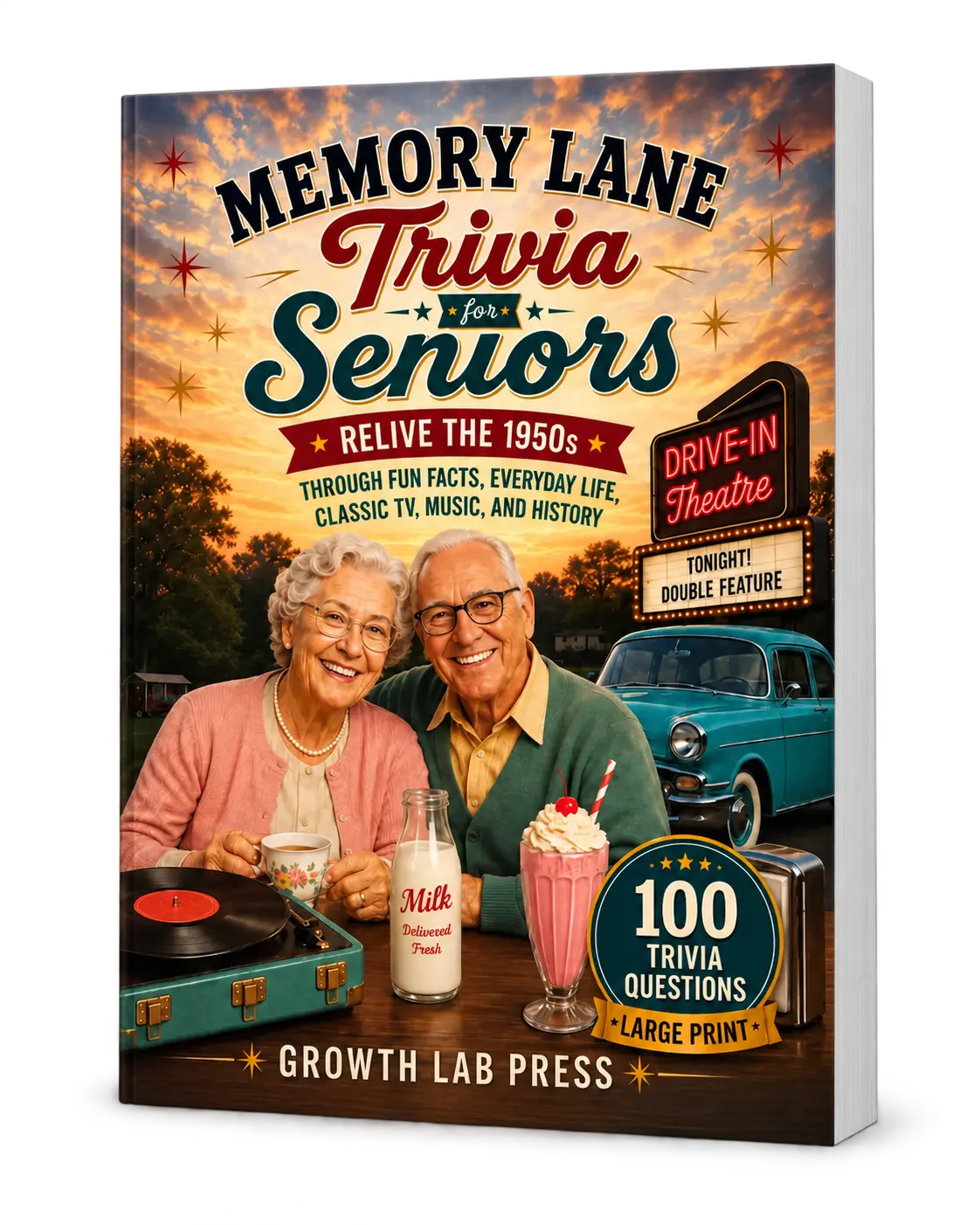
Memory Lane Trivia for Seniors provides 100 large-print questions designed around 1950s facts, daily life and conversation.
Common questions
Questions readers ask
How many trivia questions work well in one session?
Eight to ten questions often leave enough time for stories and follow-up conversation in a 20-minute session.
Should the session keep score?
Scoring is optional. For many families and activity groups, conversation and participation matter more than a final score.
Is it appropriate to record the conversation?
Ask everyone first. If they agree, a phone or recorder helps preserve stories for the family.
Sources
Qualified references used for this guide
- Library of Congress: Oral Histories and Family Interviews
- National Institute on Aging: Cognitive Health and Older Adults
Growth Lab Press guides provide general information. They do not replace medical, mental health, educational or legal advice.