Family stories
How to Interview Two Grandparents Together: 12 Paired Questions
Use 12 paired questions and a simple turn-taking method to interview two grandparents together while preserving both voices and shared family stories.
Why interview two grandparents together?
Two people may remember different details about the same home, celebration, journey or family routine. One person may remember the order of events while the other recalls a sound, expression or small moment. The differences can add depth without turning the conversation into a contest over who is correct.
A joint interview is not right for every subject. Ask both grandparents whether they would enjoy talking together, explain the topics in advance and offer separate conversations as an alternative. Do not assume they share the same background, relationship history or comfort with every question.
The Smithsonian Archives notes that oral history can use one-to-one or group interviews. Its guidance emphasizes preparation, open questions, close listening, non-leading follow-ups and respect for how each person remembers an experience. The Library of Congress recommends short questions, a quiet recording location and encouragement without interruption.
Prepare a short, shared interview
Choose four to six questions for one conversation. Send the topics ahead when possible so both grandparents can decide whether they want to gather a photograph, letter or object. Put the easiest question first and leave sensitive subjects off the list unless both people invite them.
If you plan to record, ask each person separately for permission and explain who will receive the recording or written story. Test the phone or recorder, silence notifications and place it close enough to capture both voices. Note the date, general location, speakers and topic at the beginning.
Use names while asking questions. Instead of saying only, ‘What happened next?’, try, ‘Grandma, what do you remember happening next?’ Clear names make the recording easier to understand later.
Use the first voice, second voice, shared detail method
For each question, invite one grandparent to answer first, then ask the other for a separate memory. Alternate who begins on the next question. Finish by asking for one detail they both want included in the family record.
A simple pattern is: ‘Grandpa, what do you remember first?’ then ‘Grandma, what stands out to you?’ and finally ‘What detail should we make sure the family keeps?’ This keeps the conversation natural while protecting space for a quieter speaker.
If one person corrects the other, thank them for the additional detail and return to description: ‘Do each of you remember where you were?’ Record uncertainty honestly with phrases such as ‘around 1972’ or ‘the family remembers the order differently’ rather than forcing agreement.
Questions about their separate early lives
Begin before their stories joined. These prompts give each grandparent an equal starting point and help younger relatives compare everyday life in two households.
- 1. What did an ordinary morning look like in each of your childhood homes?
- 2. Who made you laugh when you were young, and what did that person do?
- 3. What family rule or saying did each of you hear often?
- 4. Which place from your younger years would you most like to show the family today?
Questions about family meaning and legacy
End with reflection rather than a fact check. Let each person answer fully before inviting a shared response.
- 9. Which family tradition matters to each of you, and how has it changed?
- 10. What challenge did your family handle as a team, and what did each of you contribute?
- 11. What quality do you admire in the other person that younger relatives should know about?
- 12. What is one lesson each of you wants future family members to carry forward?
Worked example: preserve two versions of one celebration
Suppose both grandparents choose question 6 and describe a crowded holiday dinner. Ask the first speaker where the meal took place, who arrived first and what job they handled. Ask the second speaker what they could hear or smell and which unexpected moment they remember. Then invite each person to name one detail the other helped them remember.
Write the keepsake with three short parts: ‘Grandpa remembers,’ ‘Grandma remembers’ and ‘What they both want us to know.’ Keep differences when they add character. For example, one person may remember heavy snow while the other remembers that the snow began after dinner. The page can preserve both accounts and label the date as approximate.
Read the finished page aloud to both speakers. Invite corrections to names, places and wording. Add a photograph or scanned menu only with permission, and keep the recording or notes with the final page.
Continue the conversation with guided journals
Our life-story questions guide includes prompts about childhood, family, work, traditions and turning points. Our family-story-journal gift guide explains how to compare question range, readability, writing space and the recipient’s preferred way to participate.
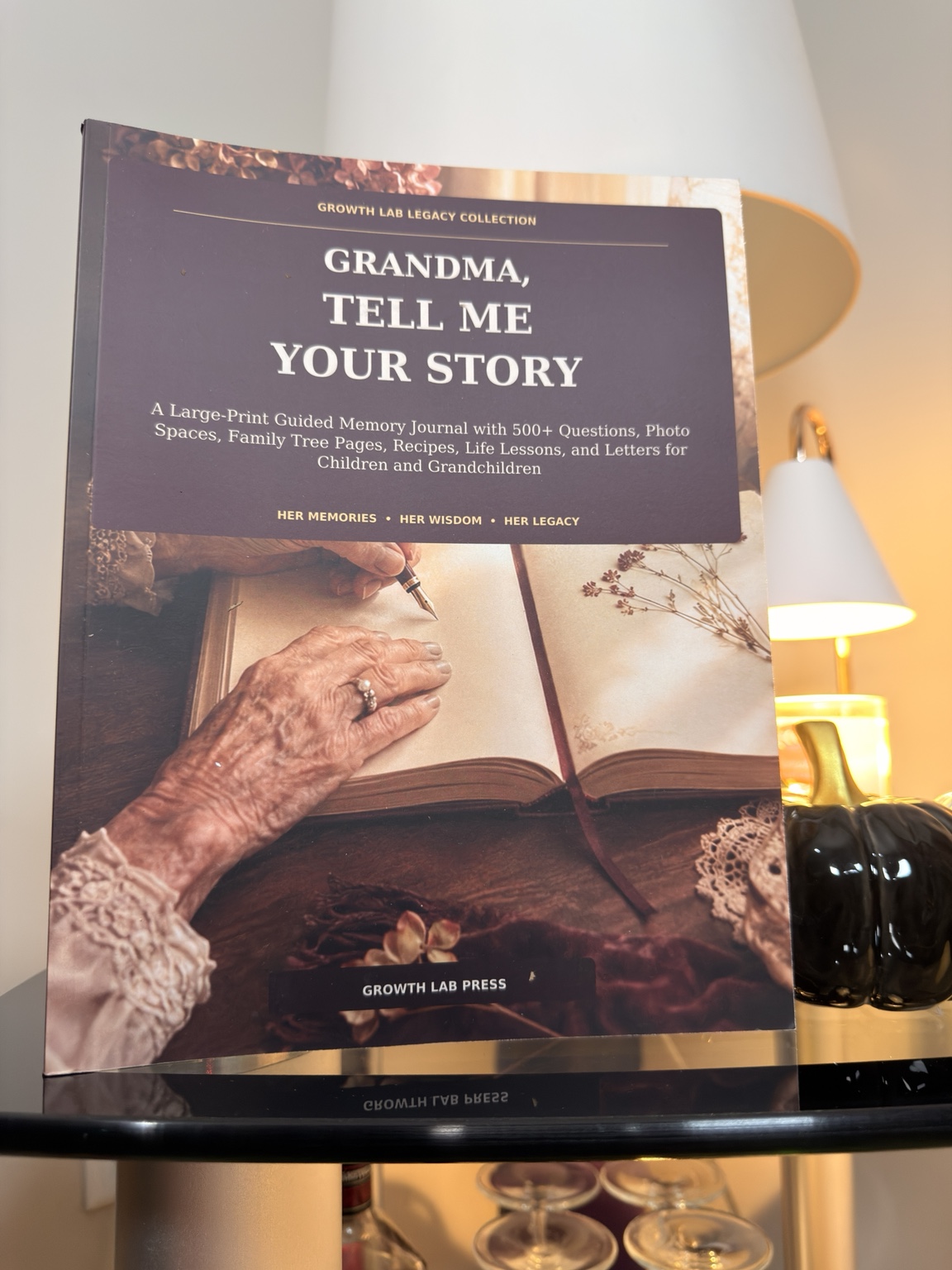
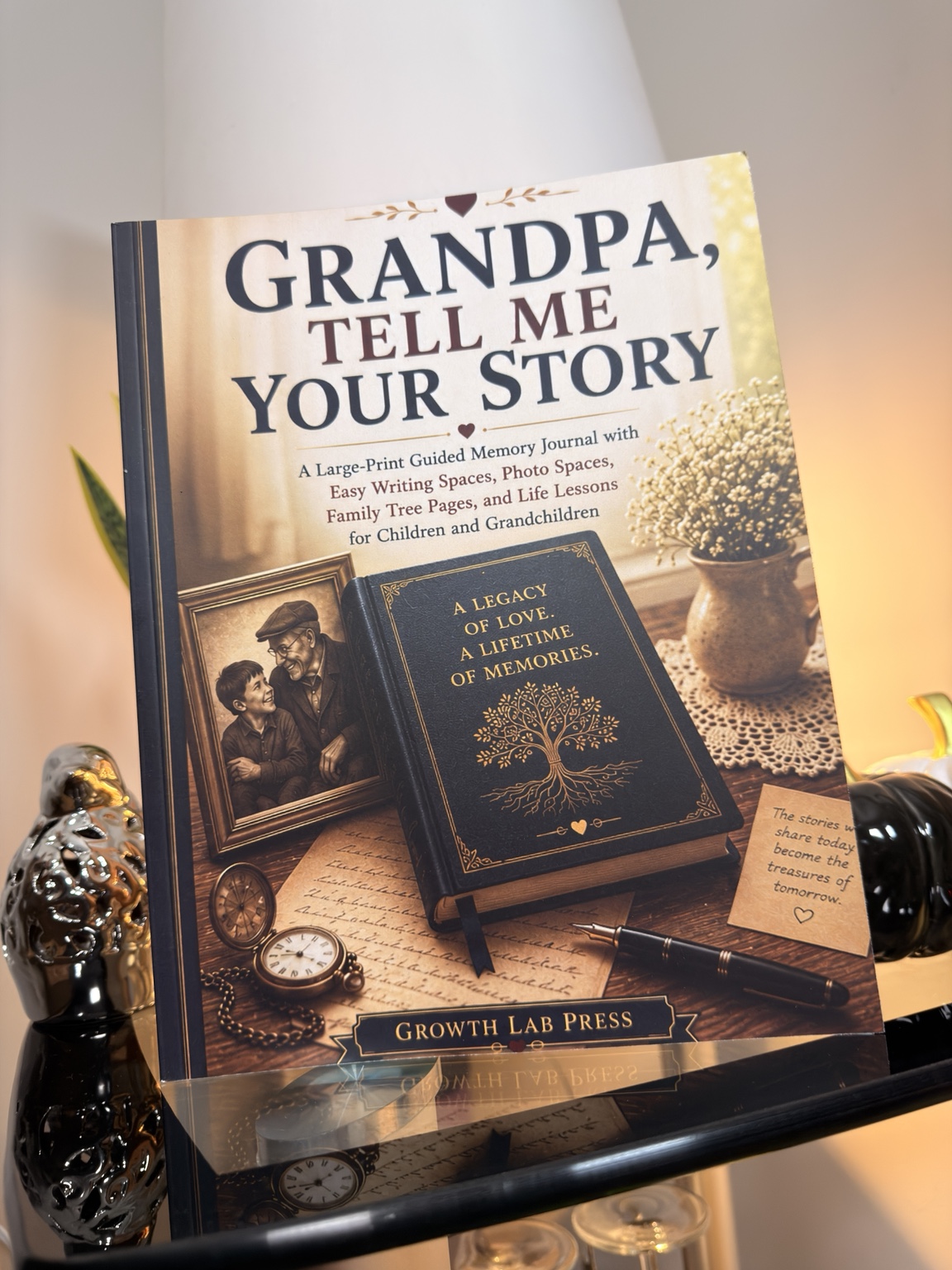
Grandma, Tell Me Your Story is a large-print guided memory journal with 531 questions, photo spaces, family tree pages, recipes, life lessons and letters. Grandpa, Tell Me Your Story is a guided keepsake journal for memories, milestones, family traditions and wisdom. Both books by Michael Bennett are currently listed in paperback and hardcover formats.
The journals can be completed separately and compared during a visit, or used as interview guides when a grandparent prefers speaking. Keep each person’s wording distinct, then add a shared note only when both agree with it.
Common questions
Is it better to interview grandparents together or separately?
Either can work. A joint interview can spark shared details, while separate interviews may give each person more space. Ask what they prefer and use separate conversations for subjects that feel private or sensitive.
How do I stop one grandparent from answering every question?
Name who will answer first, invite the second person next and alternate the starting speaker. Use a friendly phrase such as, ‘I want to make sure we preserve both versions.’
What if my grandparents remember an event differently?
Record both accounts without forcing agreement. Mark uncertain dates or details as approximate and verify documents later if the exact fact matters.
How many paired questions should we use in one visit?
Start with four to six. Follow the stories that emerge and save the remaining questions for another visit.
Sources and further reading
Published by Growth Lab Press. Read our editorial standards.