Family stories
How to Make a Family Memory Jar With Grandparents: 24 Prompts
Make a family memory jar with 24 original prompts for grandparents, plus simple ways to record stories, include relatives and create a keepsake.
What is a family memory jar?
A family memory jar is a container filled with individual story questions. A grandparent chooses one slip, answers in their own way and decides whether the answer should be written down, recorded or simply enjoyed as a conversation.
The jar turns a large family-history project into one small question at a time. Use it during visits, phone calls, family meals or holidays. A box, basket or large envelope works just as well as a jar, so choose a container that is easy to reach and open.
The Library of Congress encourages families to ask permission before recording an older relative and suggests using a phone or digital recorder when everyone agrees. The StoryCorps question list also shows how open questions about places, relatives, traditions and advice can invite fuller stories.
Set up the memory jar in five steps
Choose 12 to 24 prompts for the first version. Write or print one question per slip in clear, dark text. Fold the slips once, place them in the container and add a label such as 'Our Family Story Jar.'
Keep a notebook, journal or stack of index cards nearby. On every saved answer, note the storyteller's name, the date and the question. If a date or spelling is uncertain, write 'to check' rather than changing the story silently.
Use two small envelopes marked 'not answered yet' and 'answered' if you want to avoid repeats. Return a question to the jar when the storyteller wants to add more later.
- 1. Pick a jar, box, basket or envelope.
- 2. Prepare one clearly printed question per slip.
- 3. Let the storyteller choose the first question.
- 4. Ask one follow-up only when it feels welcome.
- 5. Label the saved answer with a name and date.
Prompts 1–6: childhood and places
Begin with concrete places and everyday details. These questions can be answered briefly or followed into a longer story.
- 1. Which room in your childhood home do you remember most clearly, and what was in it?
- 2. What could you see or hear outside your home when you were young?
- 3. Where did children in your neighbourhood gather to play?
- 4. What journey did your family make regularly, and how did you travel?
- 5. Which shop, street or public place from your youth would you like to see again?
- 6. What season felt most exciting when you were a child, and what made it special?
Prompts 7–12: people and traditions
Let the storyteller choose whom to discuss. If a question feels private or painful, put it aside without asking for an explanation.
- 7. Who in your family could always make people laugh, and what did they do?
- 8. Which relative taught you a practical skill you still remember?
- 9. What family saying did you hear often, and who usually said it?
- 10. How did your family welcome a visitor or new neighbour?
- 11. Which celebration included a detail that younger relatives might not know about?
- 12. What tradition would you keep exactly as it was, and what would you happily change?
Prompts 13–18: work and everyday life
Ordinary routines can preserve details that major-event questions miss. Invite descriptions of tools, clothes, meals, sounds and people.
- 13. What was the first task you were trusted to do on your own?
- 14. What did a normal morning look like during your first job?
- 15. Which household job took much longer then than it does now?
- 16. What meal did your family make when time or money was short?
- 17. What item did you save carefully to buy, and how long did it take?
- 18. Which everyday invention changed your routine the most?
Prompts 19–24: favourites and lessons
End with questions that invite preferences, values and advice without demanding a perfect life summary.
- 19. Which song, book or programme can still take you back to a particular time?
- 20. What simple pleasure has stayed important to you through the years?
- 21. Which decision are you glad you took time to think through?
- 22. What mistake taught you something useful that you are willing to share?
- 23. What quality do you hope younger family members carry forward?
- 24. Which story would you most like the family to remember in your own words?
Turn one answer into a usable family record
Ask how the storyteller wants the answer preserved. They may write it, dictate while someone else writes, make a voice recording or choose not to save it. Get clear permission before recording, copying or sharing the story.
When recording, begin with the date, place, storyteller's name and question. Let the person finish before asking a follow-up. Keep their own wording in notes or transcripts, and mark uncertain facts for later checking instead of rewriting them as certain.
Add one supporting item only when it helps: a labelled photograph, a recipe card, a map, a song title or a picture of a keepsake. Store digital recordings with filenames that include the person's name and date, and keep a backup in a separate safe place.
Adapt the memory jar for visits, calls and groups
For a short visit, draw one question and stop when the conversation naturally ends. For a phone call, a family member can choose the slip and read it aloud. For a group, let everyone answer the same question or invite one person to tell the main story while others add details afterward.
Make the activity easier by offering two question choices, reading the slip aloud and writing on the storyteller's behalf. A person can point to a topic card—home, people, work, celebrations or lessons—before choosing a question.
There is no requirement to finish every slip. Remove questions that do not suit the person, and add new prompts based on places, people or objects they enjoy discussing.
Move selected stories into a guided family journal
Our life-story question guide offers more ways to begin comfortably, follow useful details and preserve family memories. Our family-story journal guide explains how to compare readability, question range, writing space and the amount of help a recipient may prefer.
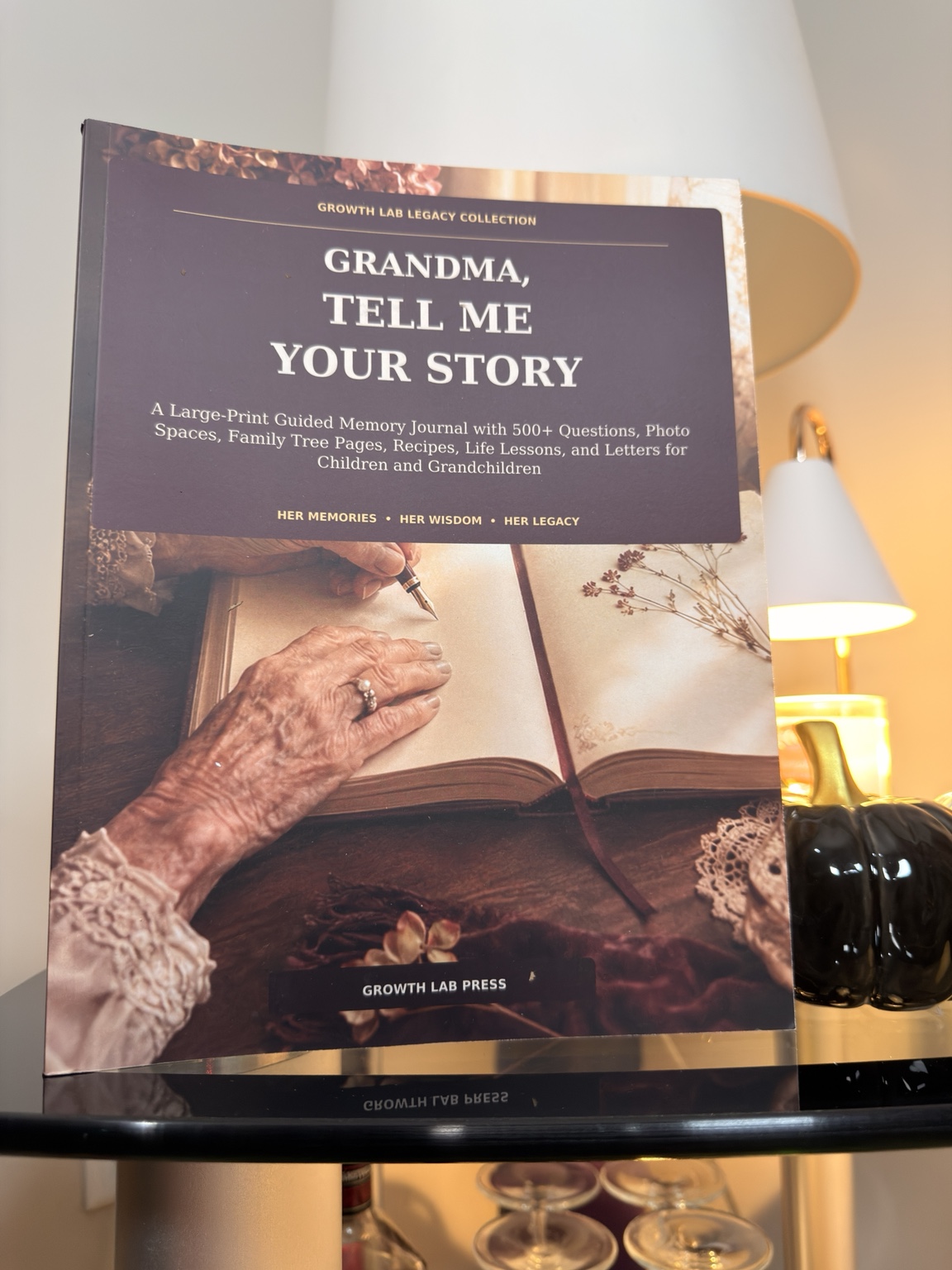
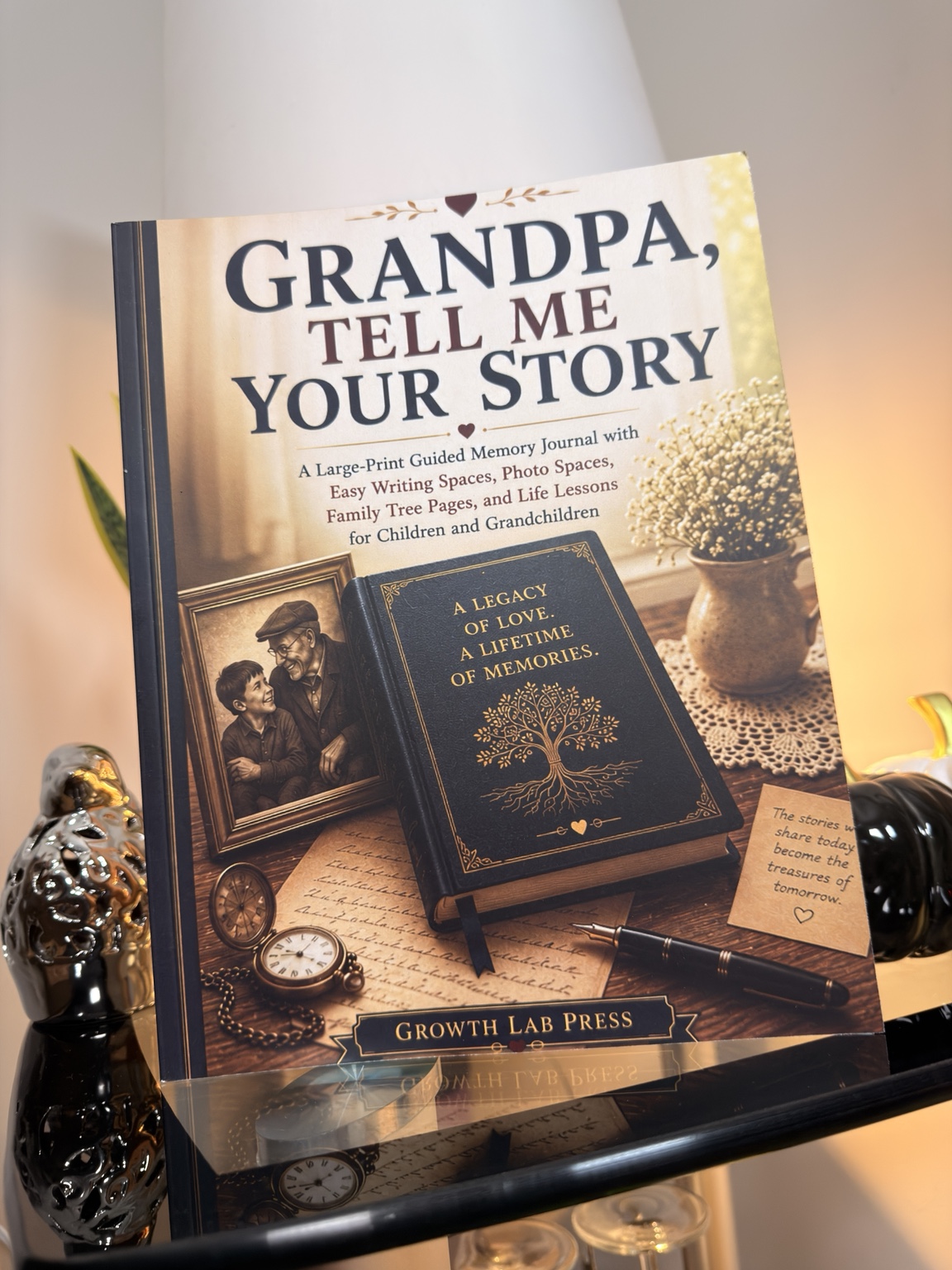
Grandma, Tell Me Your Story by Michael Bennett is a large-print guided memory journal with 531 questions, photo spaces, family tree pages, recipes, life lessons and letters. Grandpa, Tell Me Your Story is a large-print guided keepsake journal for memories, milestones, family traditions and wisdom. The current product pages list paperback and hardcover formats for both books.
Use the linked book pages to inspect the real covers, photographs and current details. The 24 memory-jar prompts above were created for this article and are not presented as questions taken from either journal.
Common questions
How many questions should go in a family memory jar?
Start with 12 to 24 questions. A smaller set is easier to review and personalize, and new questions can be added after the first few conversations.
What if a grandparent does not want to write?
Use the slips as conversation prompts. With permission, a family member can write the answer, record the person's voice or leave the story as a shared conversation.
Can children add questions to the jar?
Yes. Ask each child to contribute one clear, respectful question. An adult can help rewrite yes-or-no questions so they invite a story.
Should every family story be checked for accuracy?
Preserve the storyteller's account in their own words. If names, dates or places need checking, label them as uncertain and verify them separately without quietly changing the original account.
Sources and further reading
Published by Growth Lab Press. Read our editorial standards.